

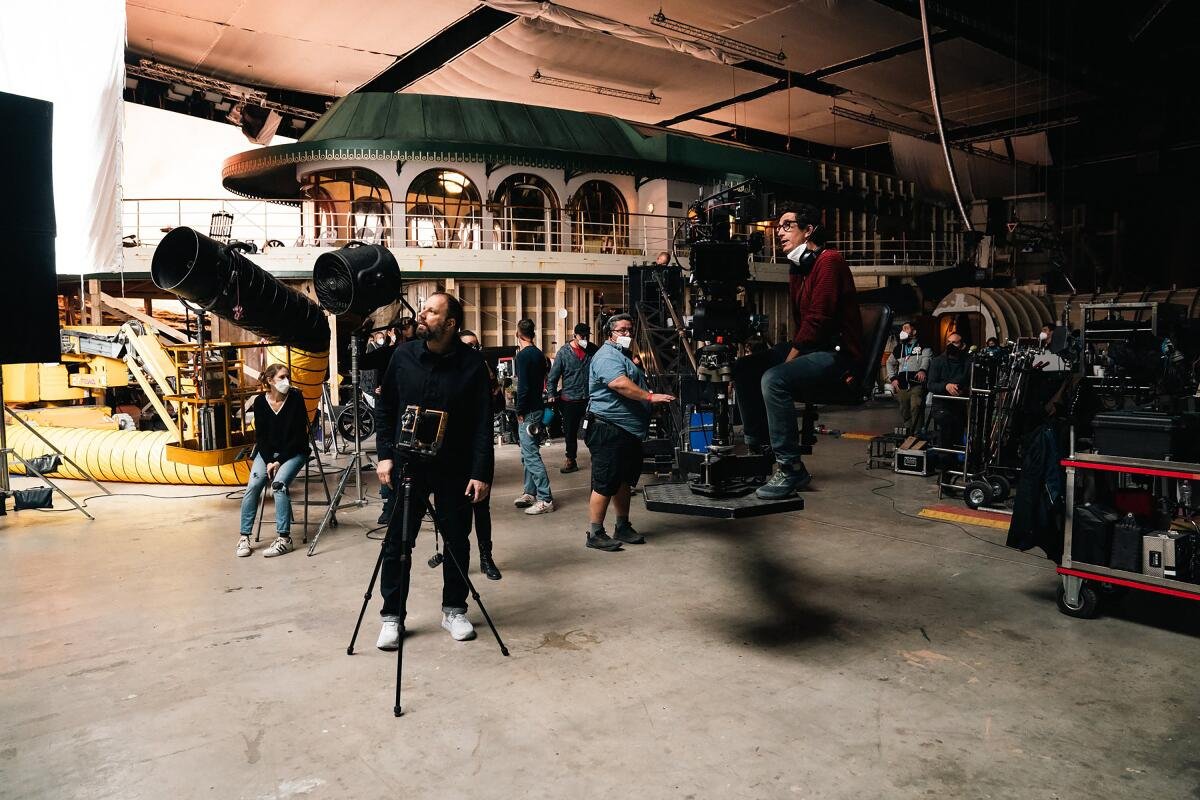
Film sets can feel mysterious from the outside, but the structure is more understandable than it first appears. Everyone is there to solve a different part of the same problem: how to turn a script into a finished film without losing time, money, or sanity.
The simplest way to understand a set is to divide the work into above-the-line and below-the-line roles.
Above the Line
Above-the-line positions are the creative leadership roles most closely tied to the project’s conception and direction. These usually include the executive producer, producer, director, writer, and cinematographer.
The executive producer often handles financing, key partnerships, or high-level oversight. The producer is the person making sure the production actually happens. The director is responsible for the creative vision on set. The writer shapes the script. The cinematographer translates the visual language into camera and light.
Those roles are distinct, even when one person wears multiple hats on a small production.
Below the Line
Below-the-line roles cover the departments that execute the production day to day. These include the assistant directors, camera team, sound department, art department, grip and electric, wardrobe, makeup, and more. On larger productions, the division gets more specialized. On indie sets, people often double up.
That is where things get tricky. Double-hatting is common in independent film, but it only works when the workload is realistic.
The 1st AD’s Real Job
The first assistant director is one of the most important roles on any set, and many people outside the industry underestimate it. The 1st AD is responsible for the schedule, the pace of the day, communication between departments, and making sure the crew stays on track.
In practice, that means they are part organizer, part traffic controller, part crisis manager. A good 1st AD protects the director’s focus by keeping the set moving. Without that role, even a talented team can lose hours to inefficiency.
Key Department Roles
The script supervisor tracks continuity, script changes, and scene details that could otherwise break the edit. The gaffer oversees lighting execution. The key grip handles the support systems that make camera and lighting setups work safely and effectively. The sound mixer captures the audio that will make the film usable in post. The production designer creates the environment the audience sees and feels.
Those roles may not be glamorous to outsiders, but they are central to the film’s quality. Every department adds something the audience experiences, even if they never name it consciously.
Indie vs. Big-Budget Scale
On a big-budget production, each department has a hierarchy and sufficient personnel. On an indie film, the same responsibilities often get compressed into smaller teams. That can work, but only if the film is honest about the scale it can support.
A one-person crew might cover directing, shooting, sound, and producing on a micro-budget project, but that is not a scalable model for every film. Once the complexity grows, the film needs real department structure or it begins to collapse under its own efficiency.
When Doubling Up Becomes a Problem
Indie filmmakers often wear too many hats because they have to. The issue is not that multitasking is bad. The issue is that some combinations create bottlenecks. A director who is also trying to operate camera may lose performance nuance. A producer who is also doing sound may miss logistical problems. The work starts to cannibalize itself.
The smarter move is to recognize when a role needs its own person. That is not wasteful. It is professional.
The Big Picture
A film set works because everyone understands where they fit. The clearer the roles, the easier it is for the crew to move quickly and make better decisions.
That structure is part of what turns a script into a functioning production. And the more you understand it, the easier it becomes to lead or join a set with confidence.